Mapping the Sacrifice Zone

Mapping the Sacrifice Zone is an ongoing participatory systems-mapping project that we facilitate in Bombay Beach at the Salton Sea in Southern California. It visualizes the interconnected systems that shape our community.
 
We have lived here part-time for 10 years. We have contributed art to the Bombay Beach Biennale, reported on Salton Sea water and health issues for international magazines, and run the Bombay Beach Environmental Conference for three years. We know most people. More importantly, they know us: not just as another journalist looking for a dramatic story or an artists using this place as a blank canvas, but as people who show up, listen, and stay.
 
Our neighbors are tired of being studied and frustrated by costly, fruitless reports. They mock the millions poured into yet another Salton Sea restoration study. They’ve watched the sea shrink, dust storms worsen, and asthma rates climb. Meanwhile, developments like lithium extraction and data centers arrive with grand promises but little transparency. Long-time residents have lived through the boom-bust-boom cycles and seen new opportunities and early signs of gentrification emerge. Tensions ebb and flow in our chat groups among residents, artists, and newcomers. All while the health and environmental crisis worsens around us.
 
We live in a sacrifice zone where climate, environment, poverty, health, class, race, and displacement collide. We need real solutions that require understanding how everything connects: 
how Colorado River water law affects health, how art and lithium development relate to gentrification, and how crisis-causing systems now propose to fix it.
 
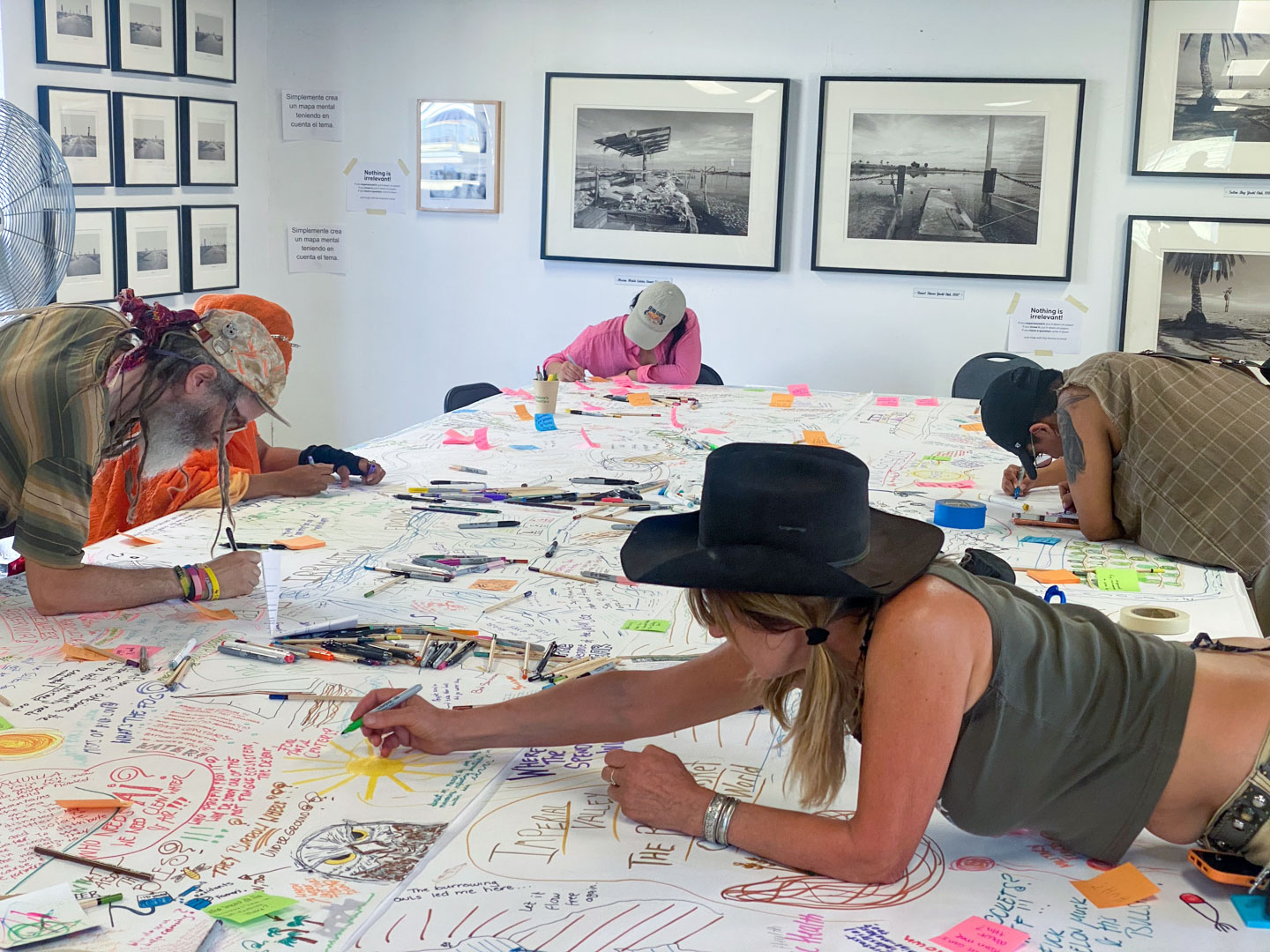
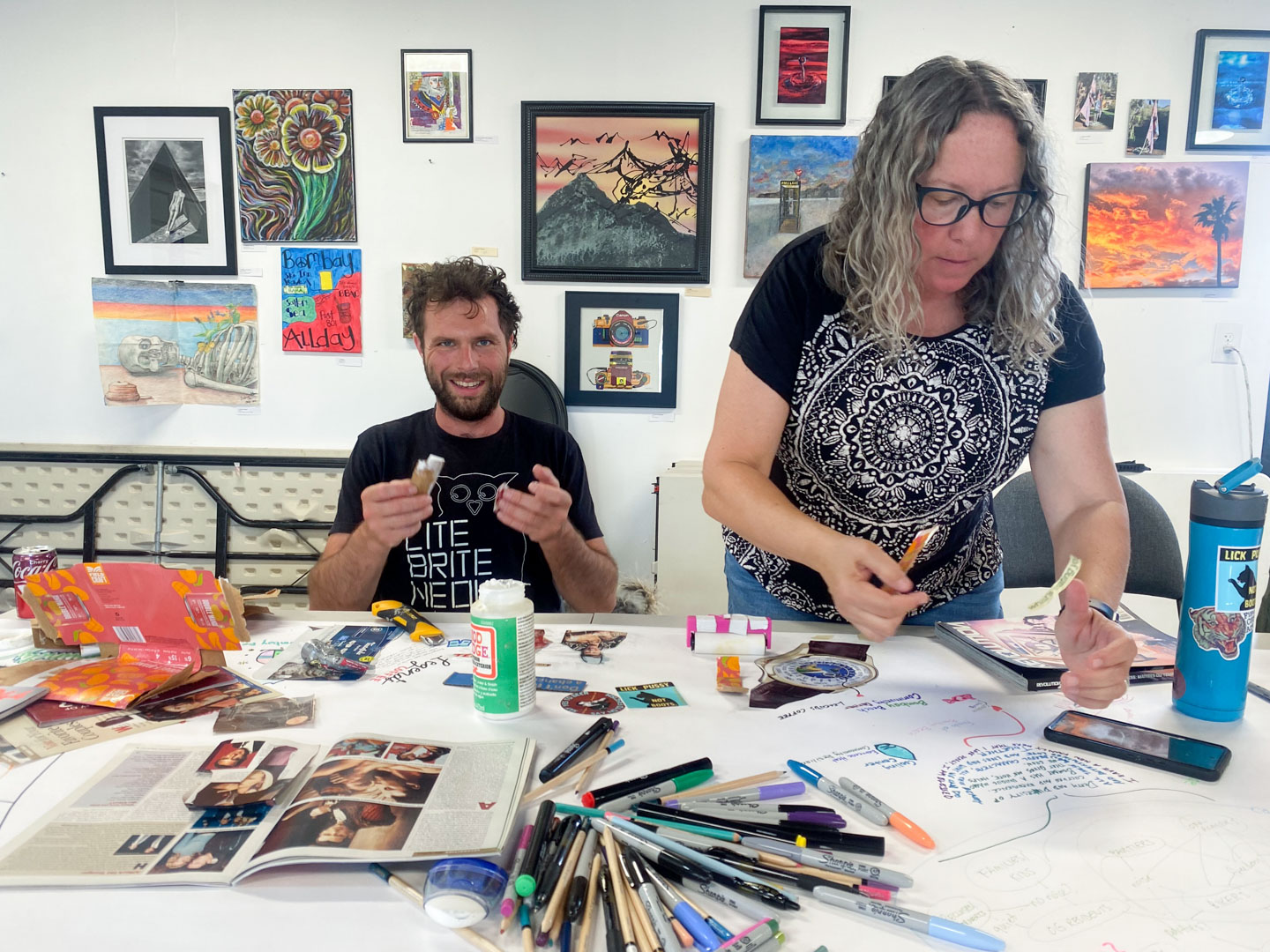
Mapping the Sacrifice Zone creates space for that understanding to emerge. It does not offer solutions, but helps us think together. Our job is to guide the process, create space for hard conversations, and ensure everyone’s voice is heard. To this end, we are collaborating with Imperial Valley Equity and Justice (IVEJ) to co-facilitate the sessions, bringing their deep roots in farmworker communities and expertise in environmental justice organizing. This ensures that Spanish-speaking community members and marginalized voices in Imperial Valley are not just present but centered in the process. Residents, experts, and stakeholders collectively map knowledge about water, environment, economy, community, and futures.
 
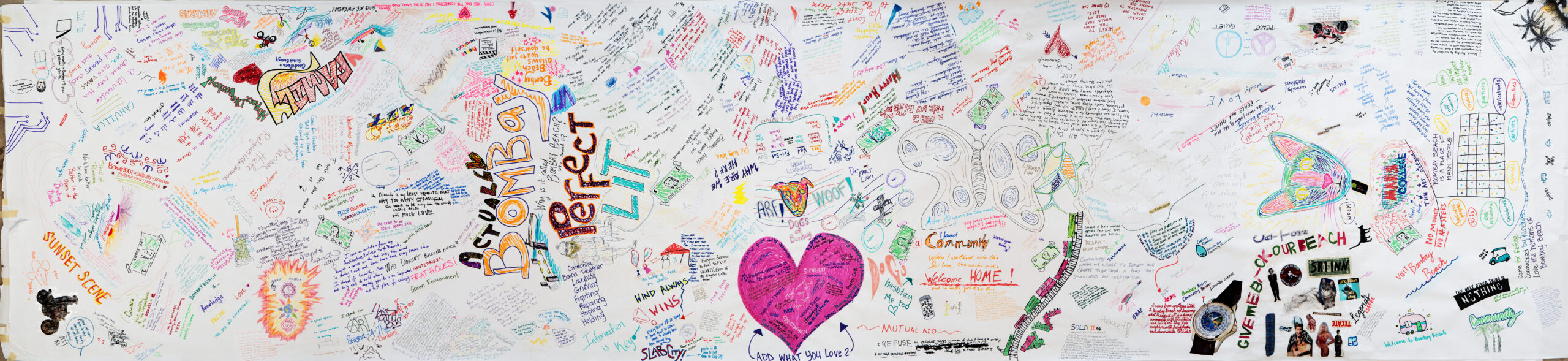
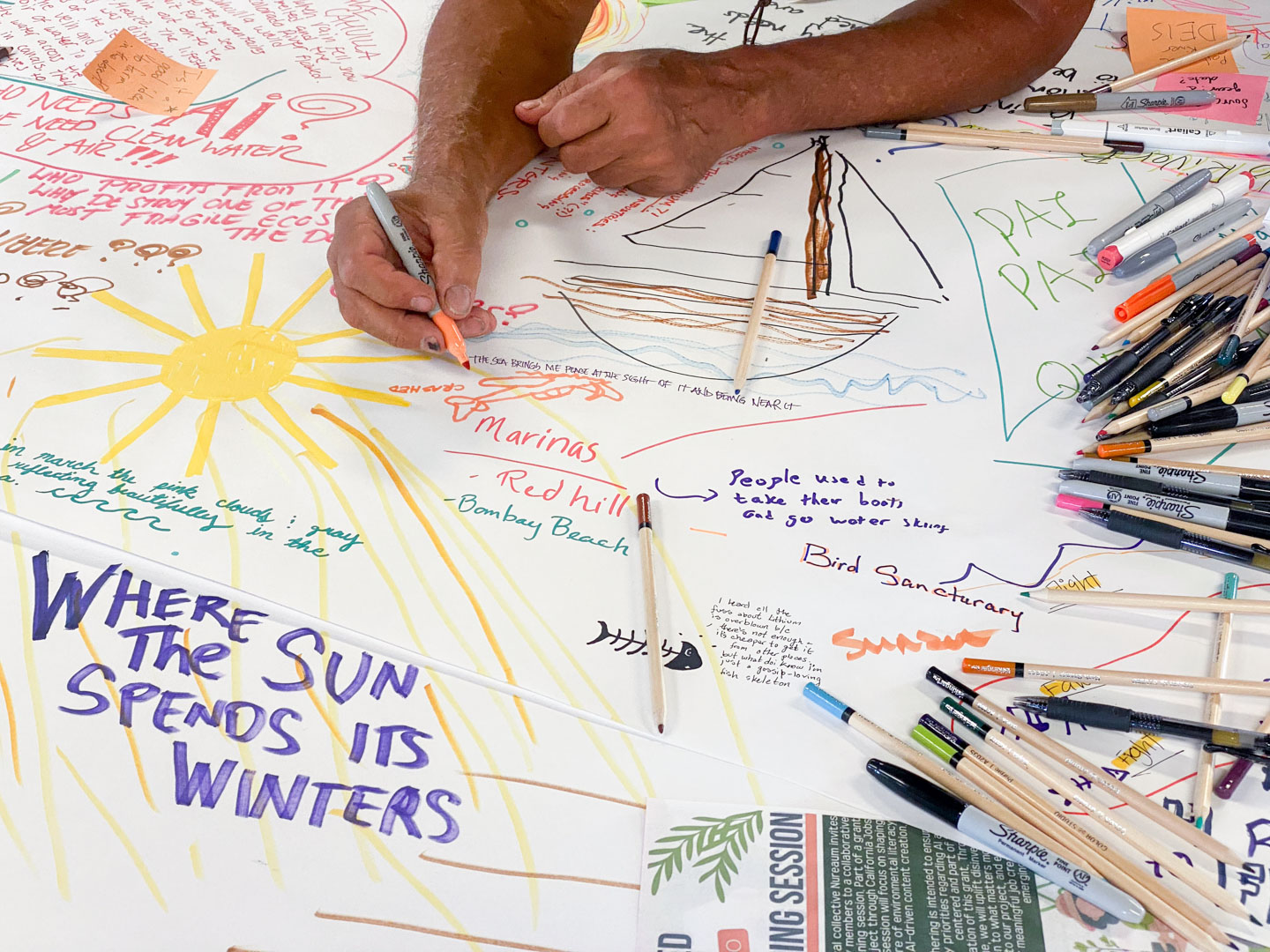
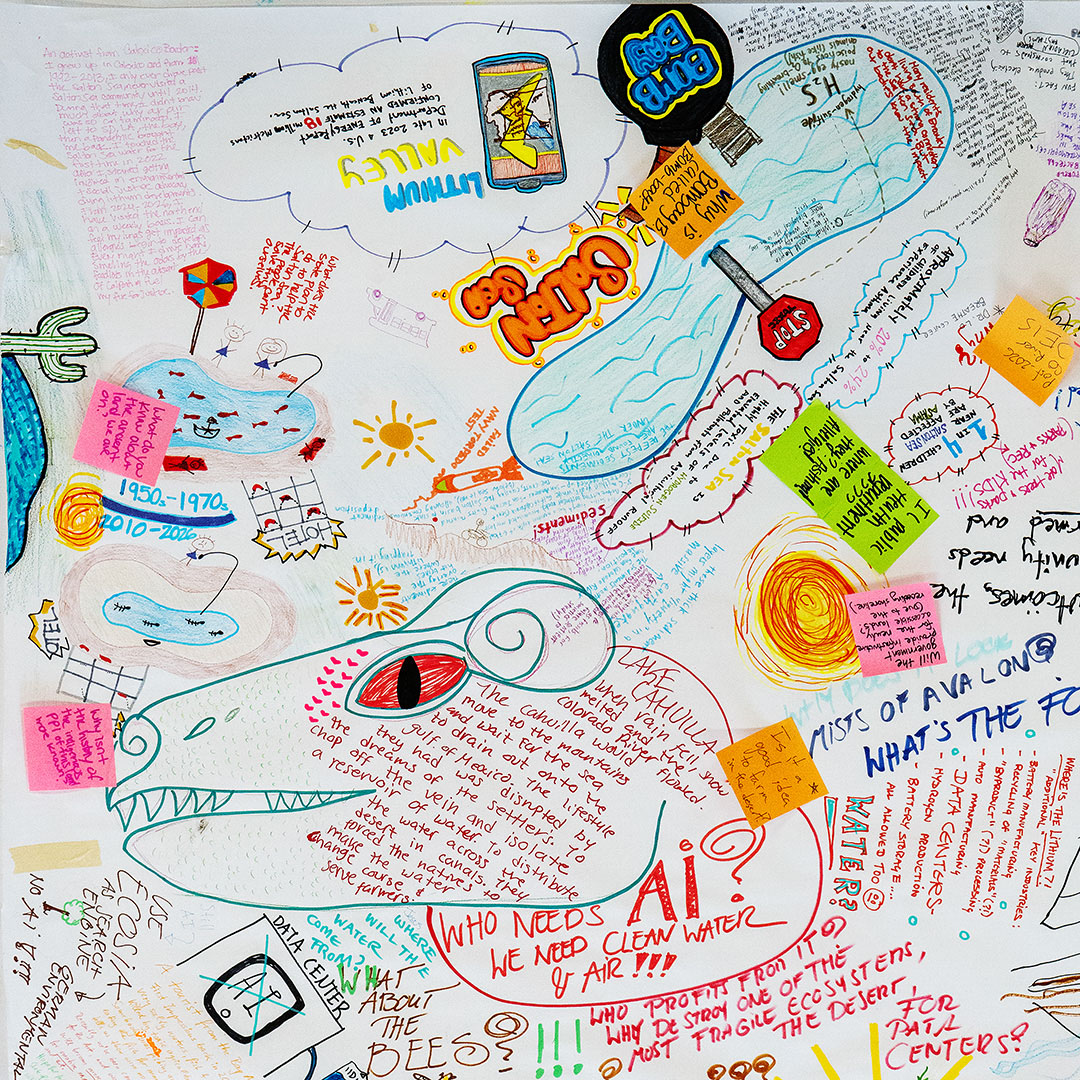
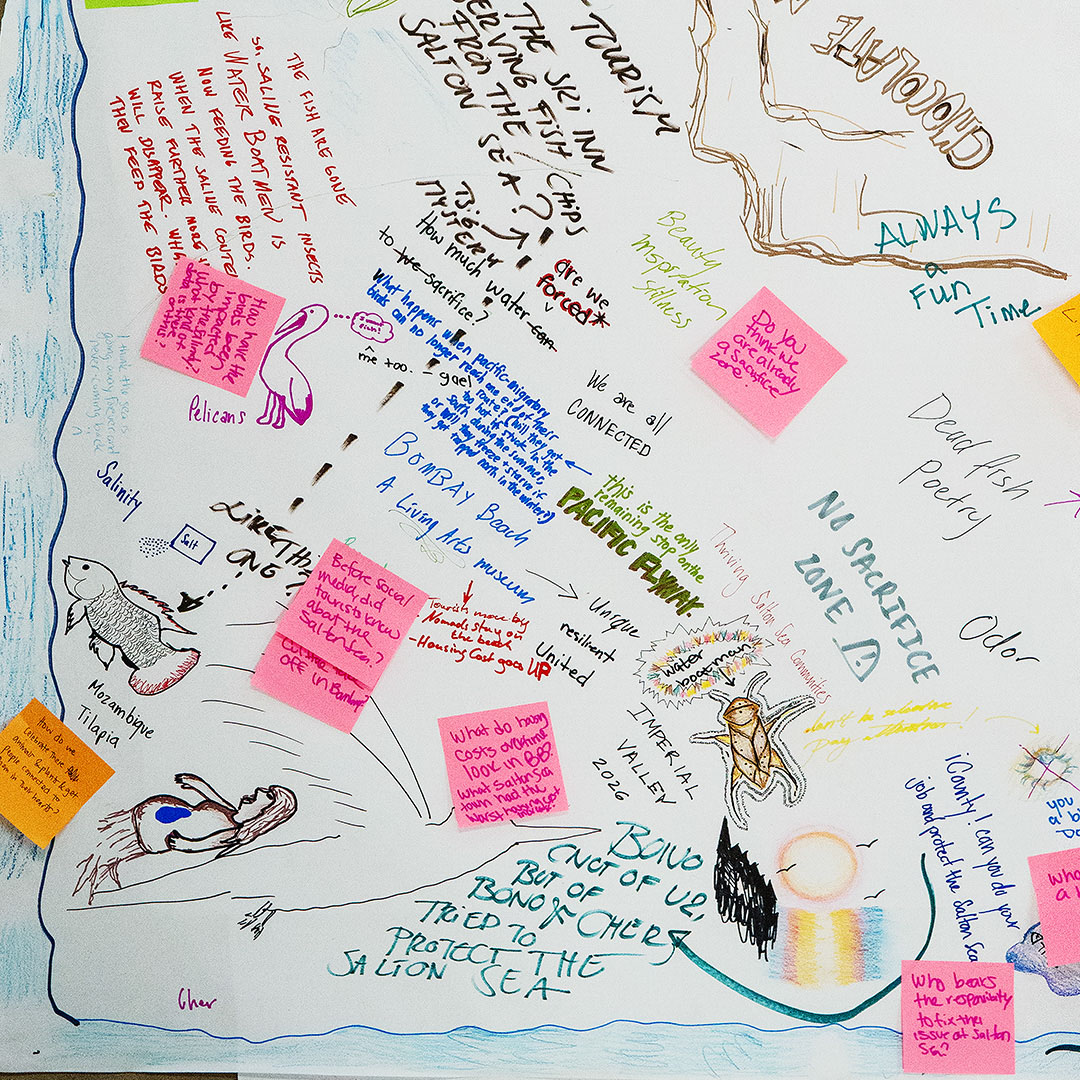
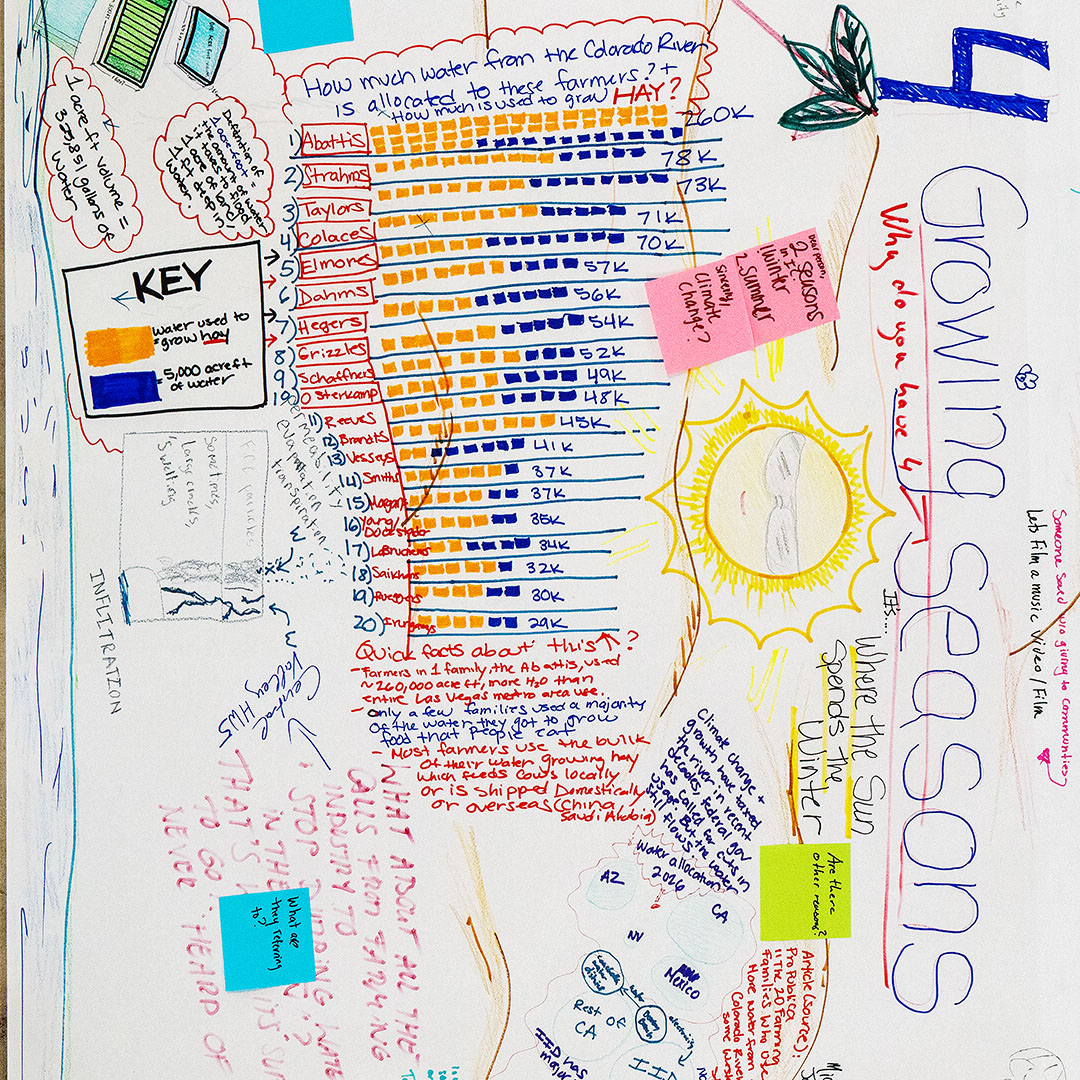
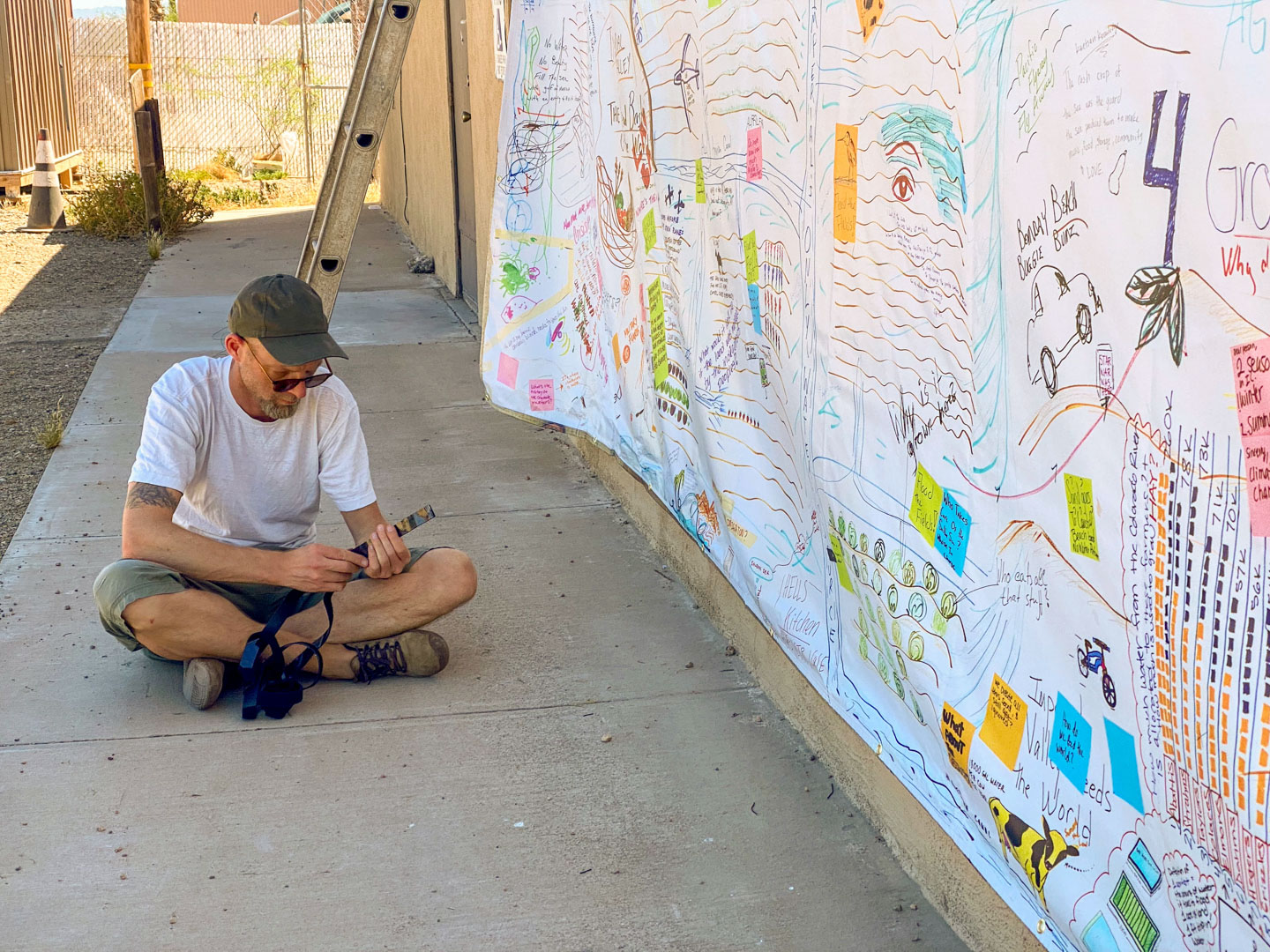
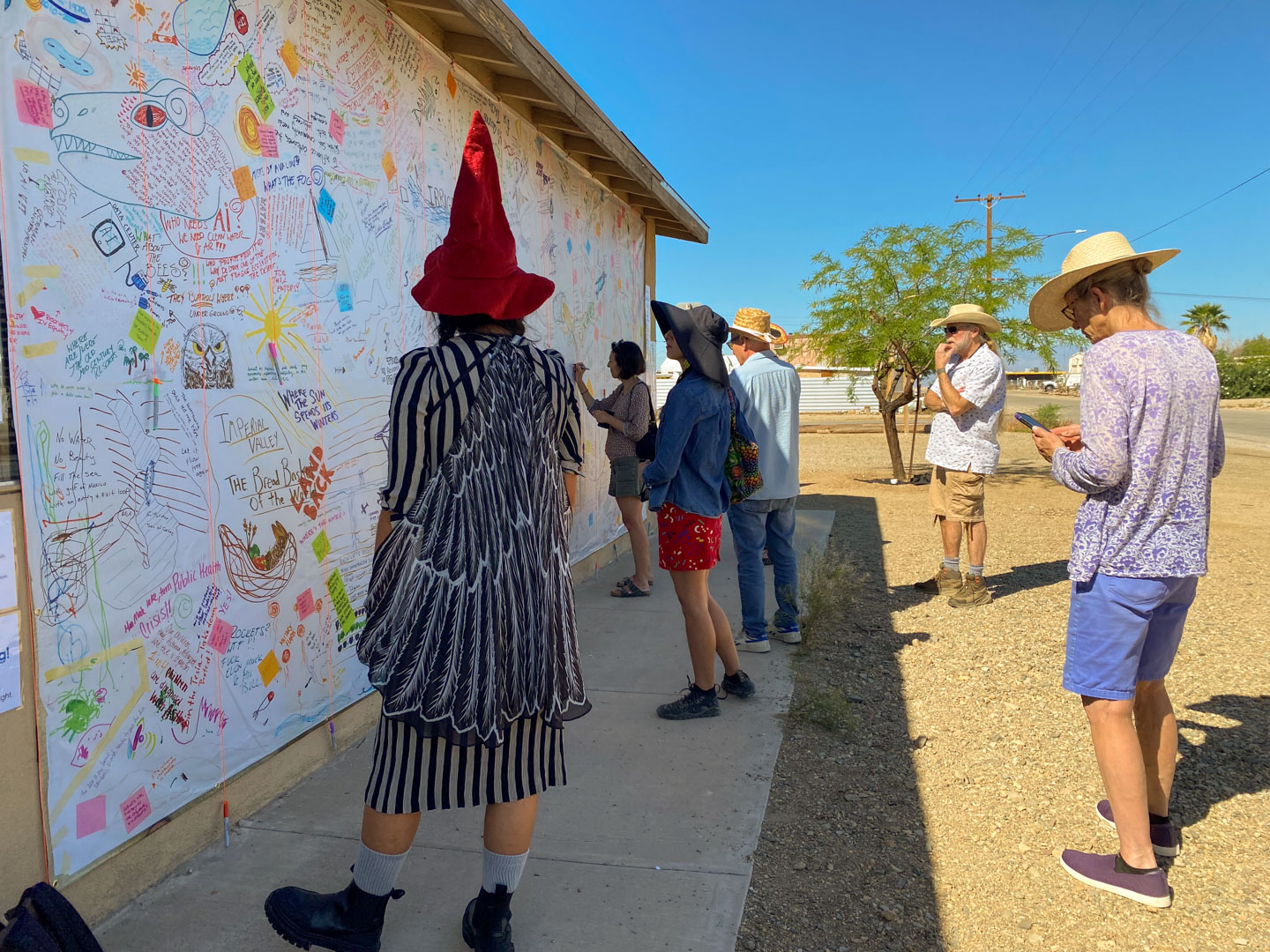
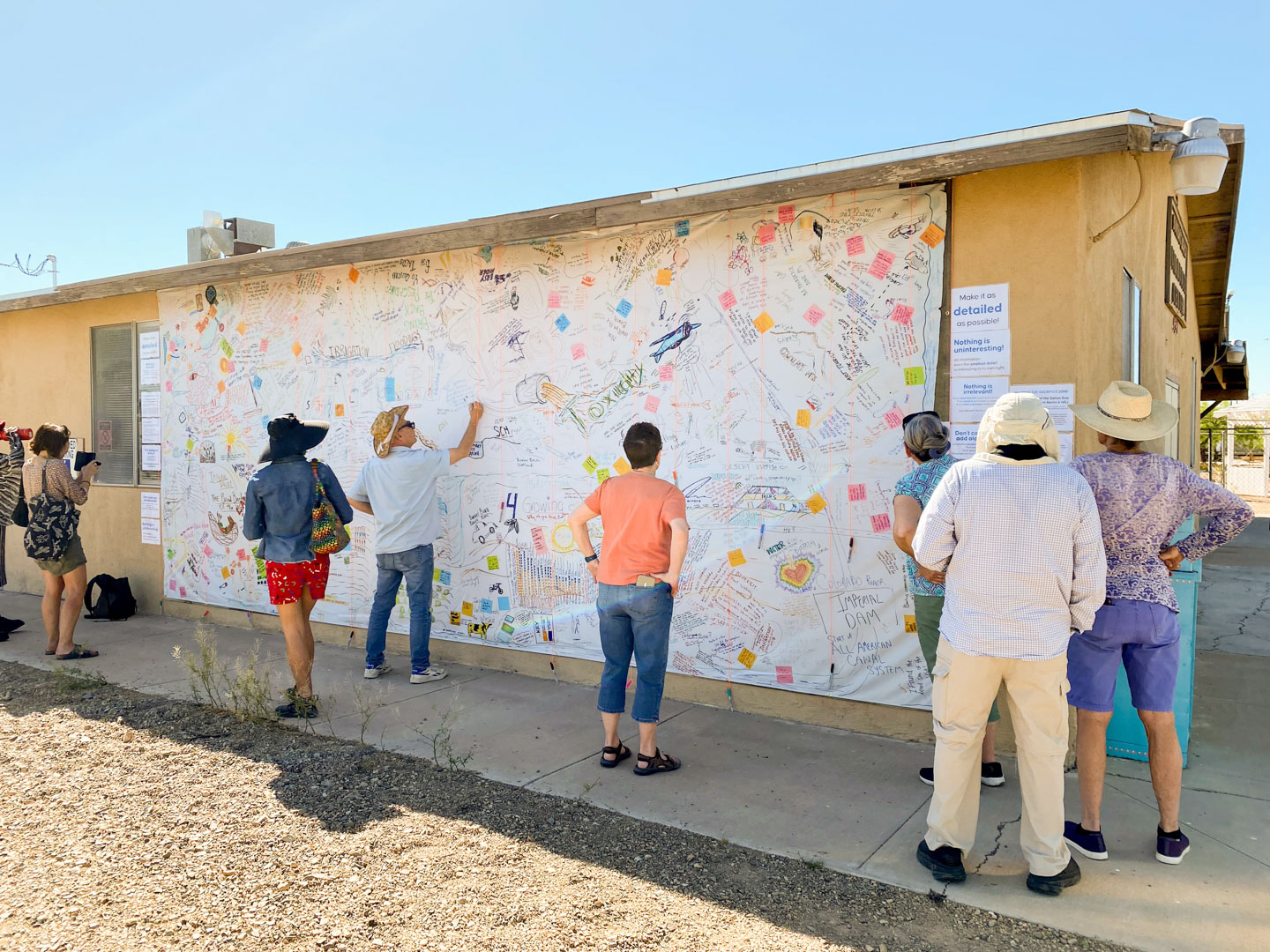
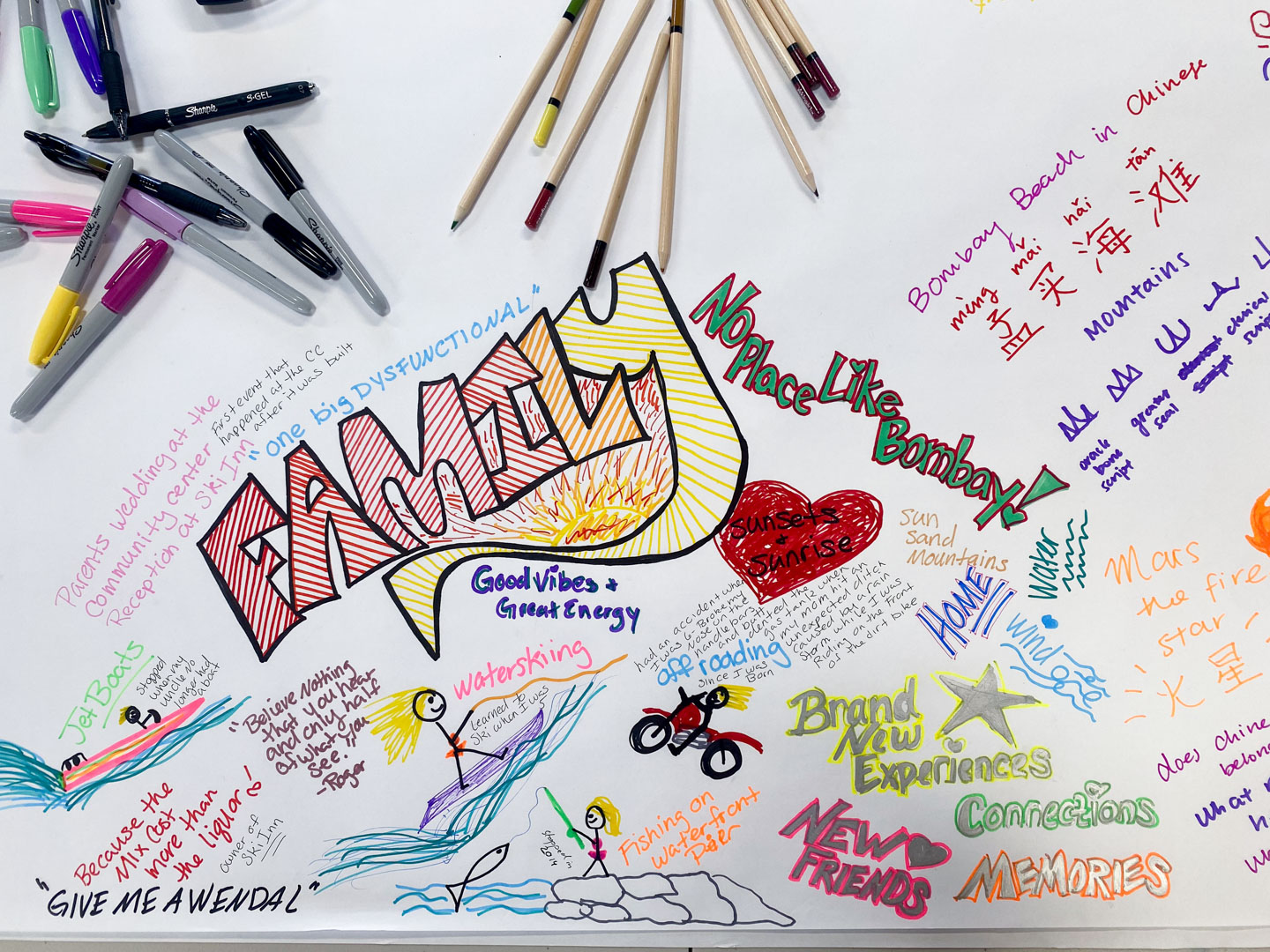
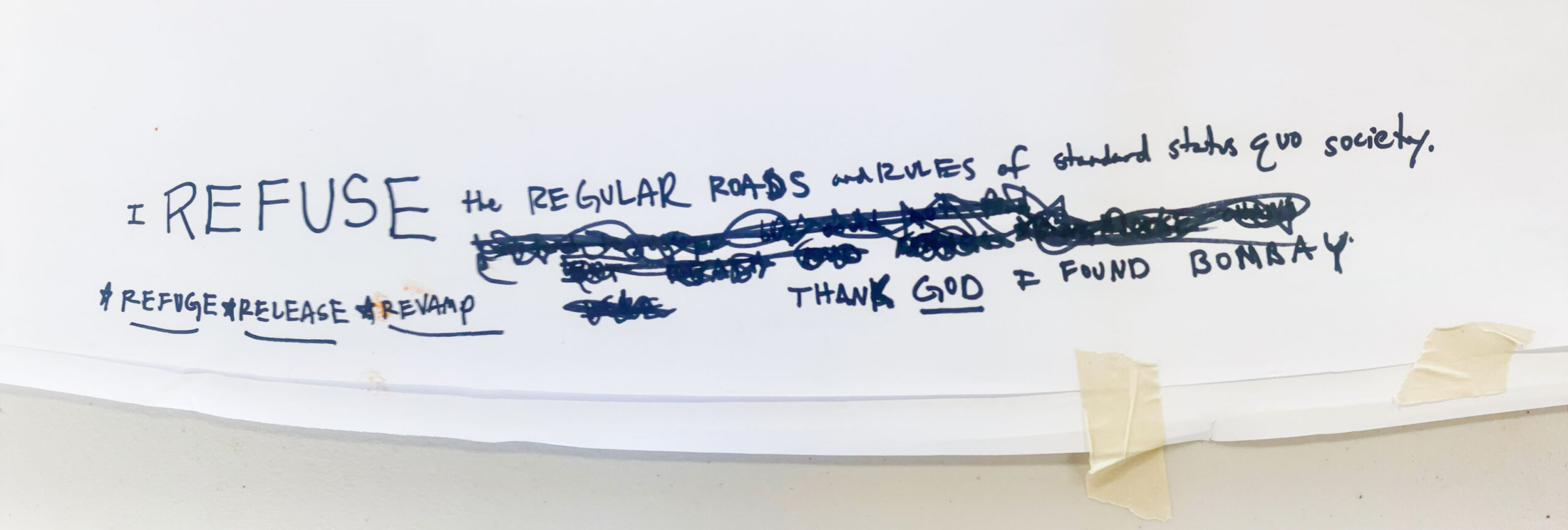
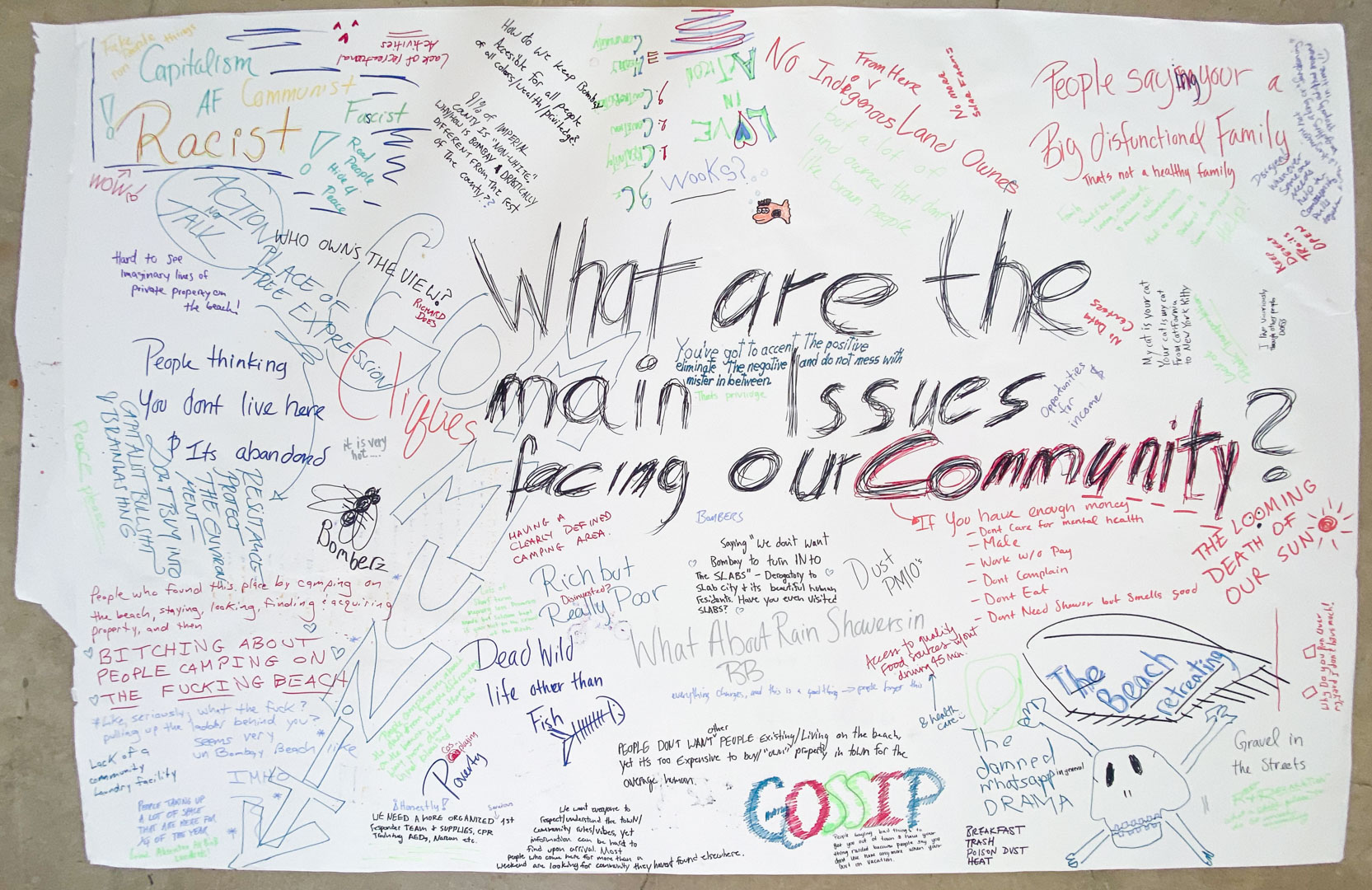
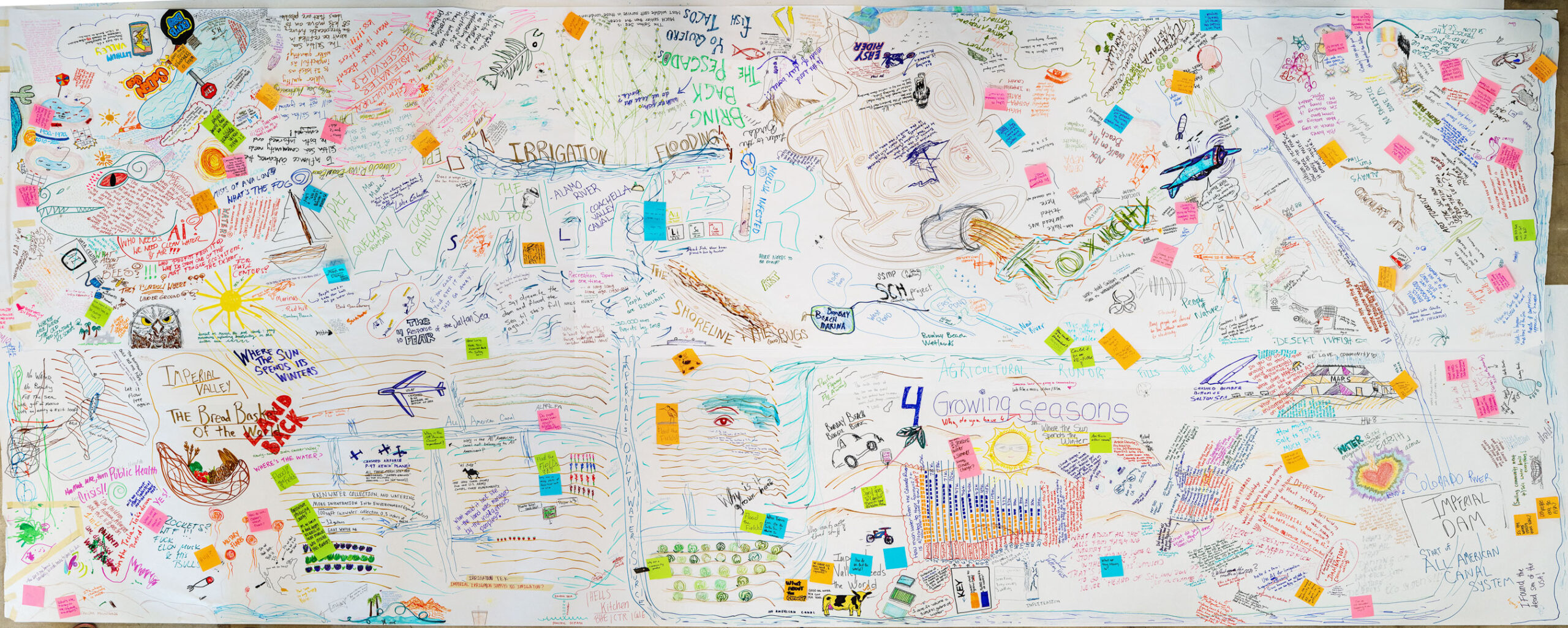
The resulting maps display dense networks of handwritten text, connections, drawings, data, and stories on wall-sized sheets of paper. They are messy, complex, layered, sometimes contradictory – the opposite of reports that simplify until nothing useful remains.
 
We facilitated the first two sessions and one public exhibition of the results in spring 2026 and will continue next season.

* A sacrifice zone is a geographic area that has been permanently impaired by environmental damage or economic disinvestment. Another definition states that sacrifice zones are places damaged through locally unwanted land use, causing chemical pollution where residents live immediately adjacent to heavily polluted industries or military bases. Sacrifice zones are geographical areas that bear a disproportionate amount of industrial pollution, toxic chemical exposure, or other environmental harms associated with industry or national security.
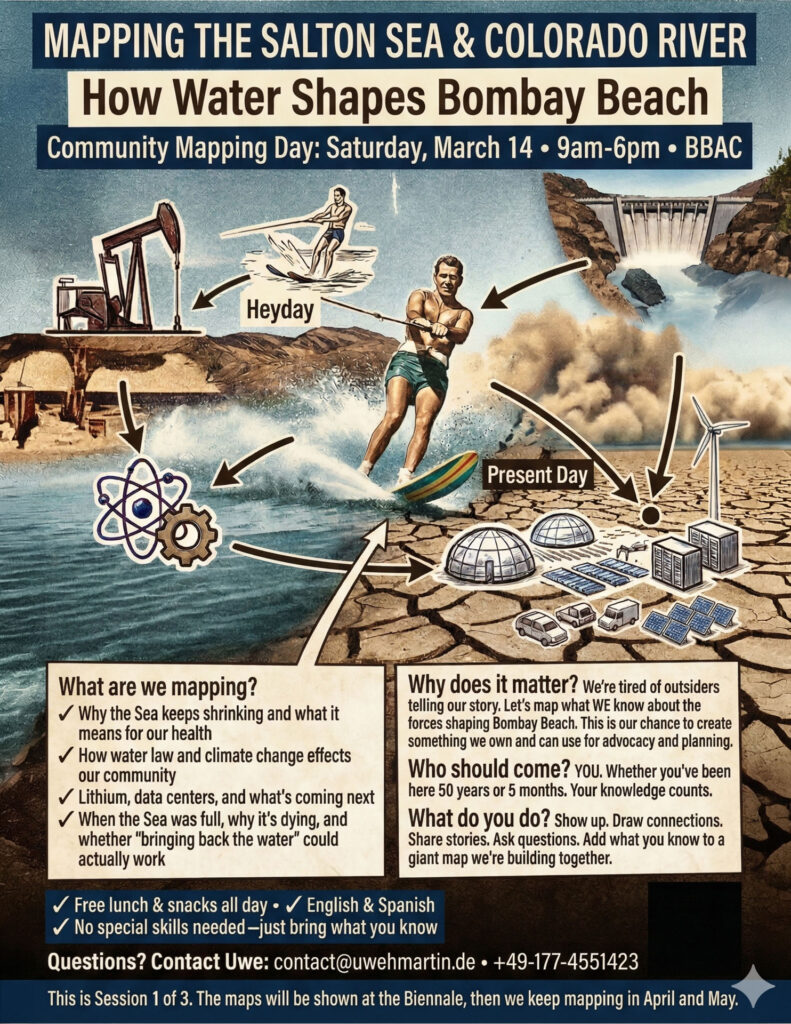
Session 01: Mapping the Salton Sea & Colorado River

Session 01 mapped the Colorado River watershed and Salton Sea systems. About 50 people – longtime residents who recall a full Sea, scientists studying the dustbowl, water experts, and community members with asthma from the exposed lakebed – spent a day mapping the forces shaping the Salton Sea and Colorado River basin. Water law, toxic dust, lithium, indigenous land rights, and twenty farming families using about one‑seventh of the Lower Colorado River’s mainstream flow.

Venue: Bombay Beach Arts and Cultural Center (BBAC), Bombay Beach, California
Date: March 14, 2026
Co-facilitation: Imperial Valley Equity and Justice (IVEJ)
Support: Partial costs covered by a grant from the Bombay Beach Institute for Industrial Espionage & Post-Apocalyptic Studies
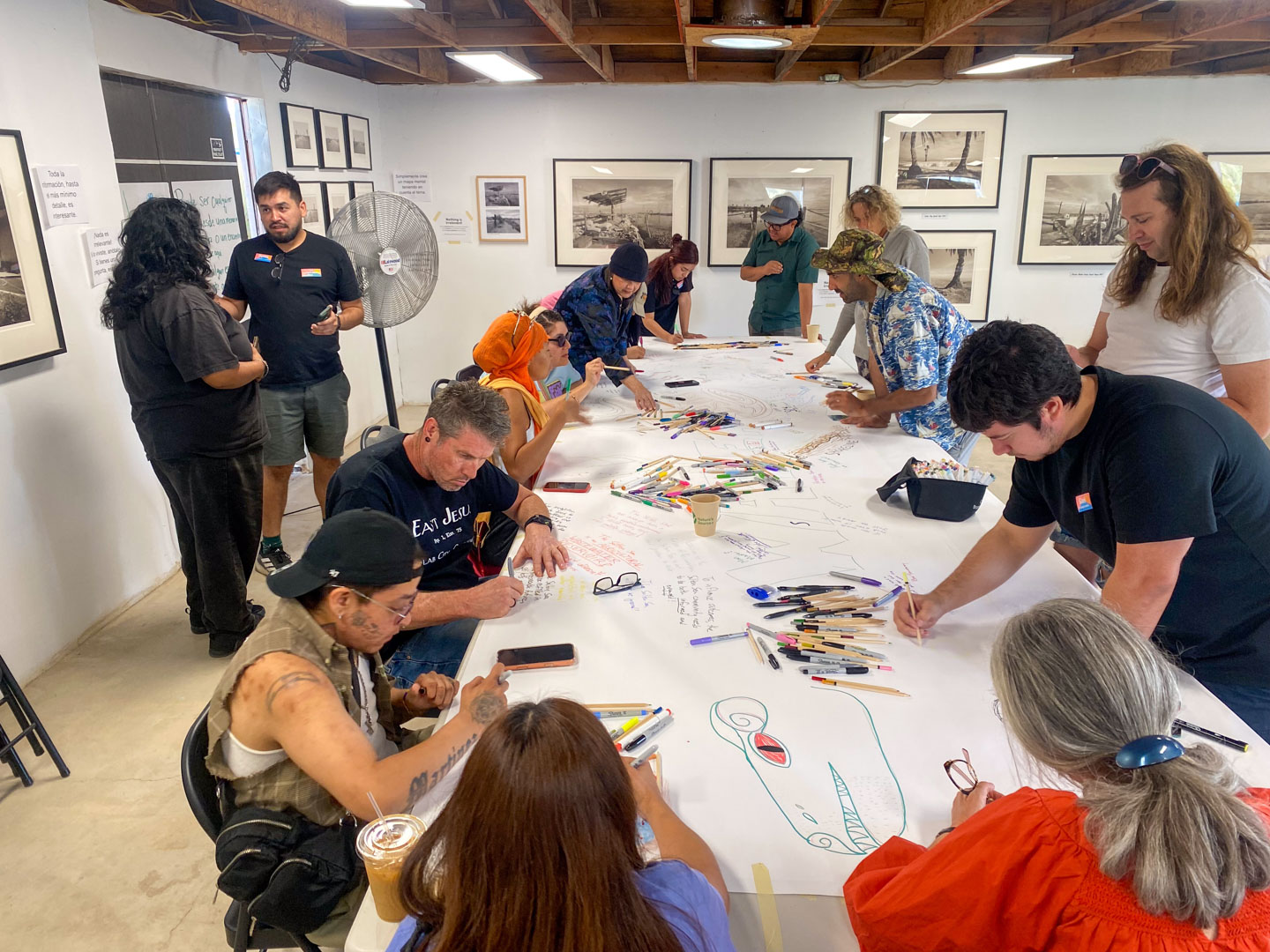
Exhibition 01: Bombay Beach Biennale

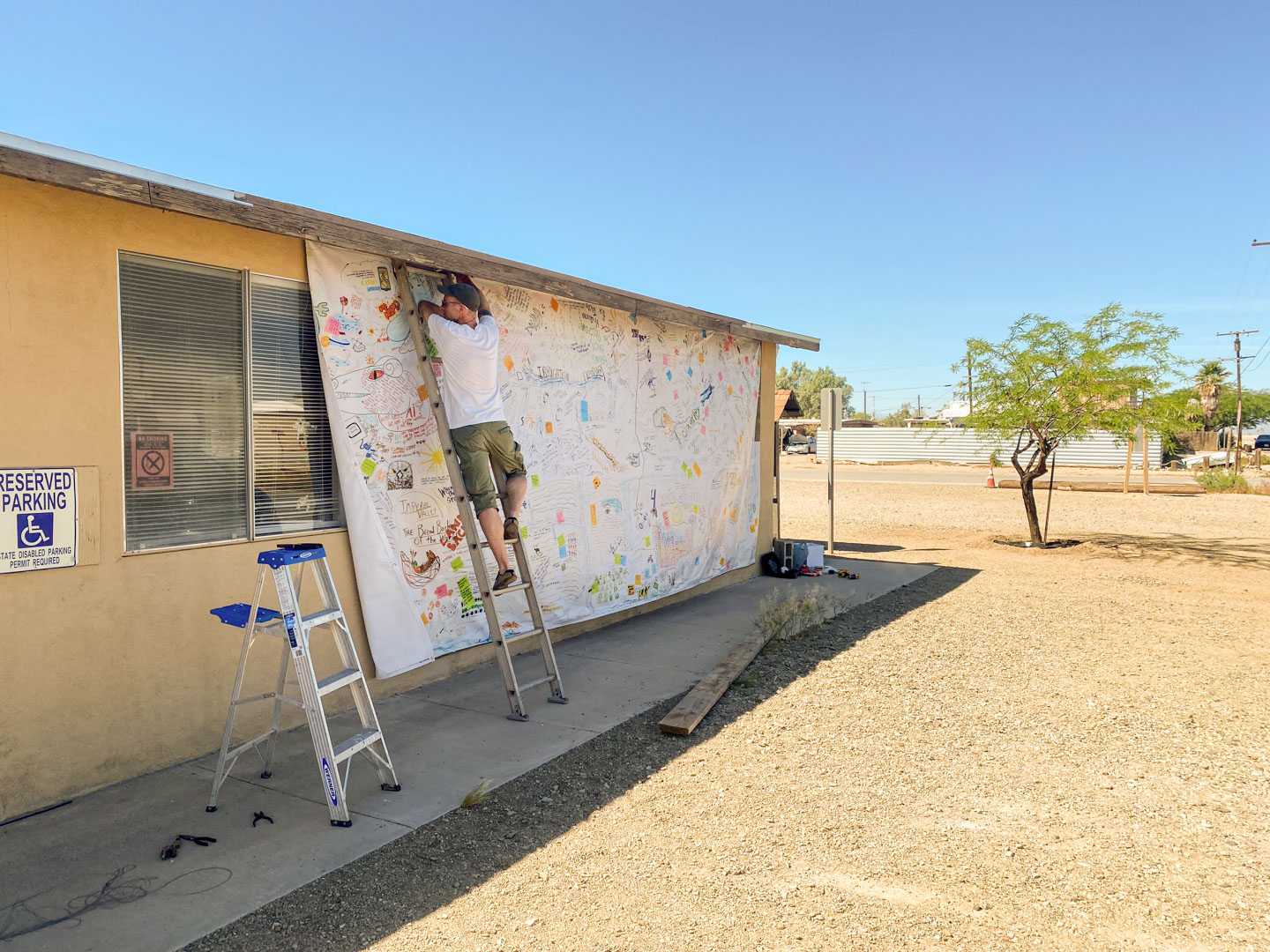
The 8-by-22-foot Salton Sea systems map from Session 01 was unveiled at the Bombay Beach Biennale and installed on the front wall of our Community Center. It was credited to “The People of the Salton Sea.” This framing is intentional. For ten years, we have witnessed outside researchers, journalists, and institutions extract knowledge from this community and give back little in return. Our project reverses that dynamic: the knowledge produced remains local and is authored by those living with these systems.
At this year’s Biennale, visitors were invited to add information, comments, and questions to the map. We see this as a powerful way for Biennale attendees to join the process, expanding our knowledge and revealing gaps.
We printed the Biennale version of the map as a vinyl poster and donated it to Imperial Valley Equity and Justice (IVEJ) for their advocacy work.

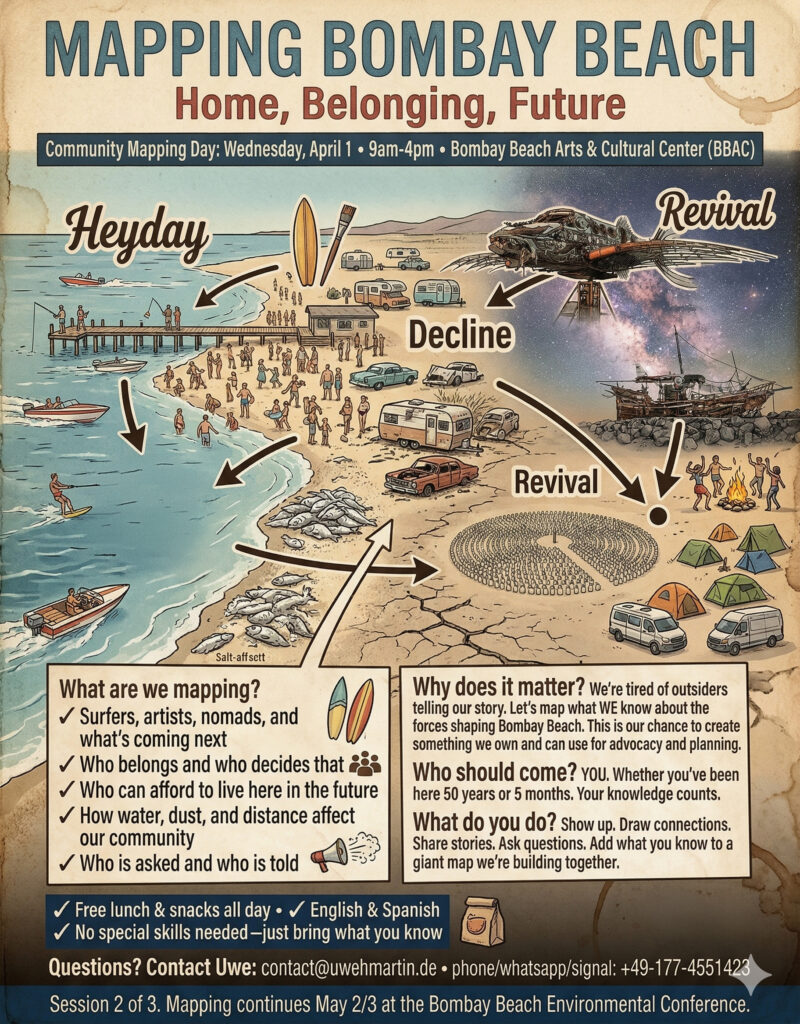
Session 02: Mapping Bombay Beach

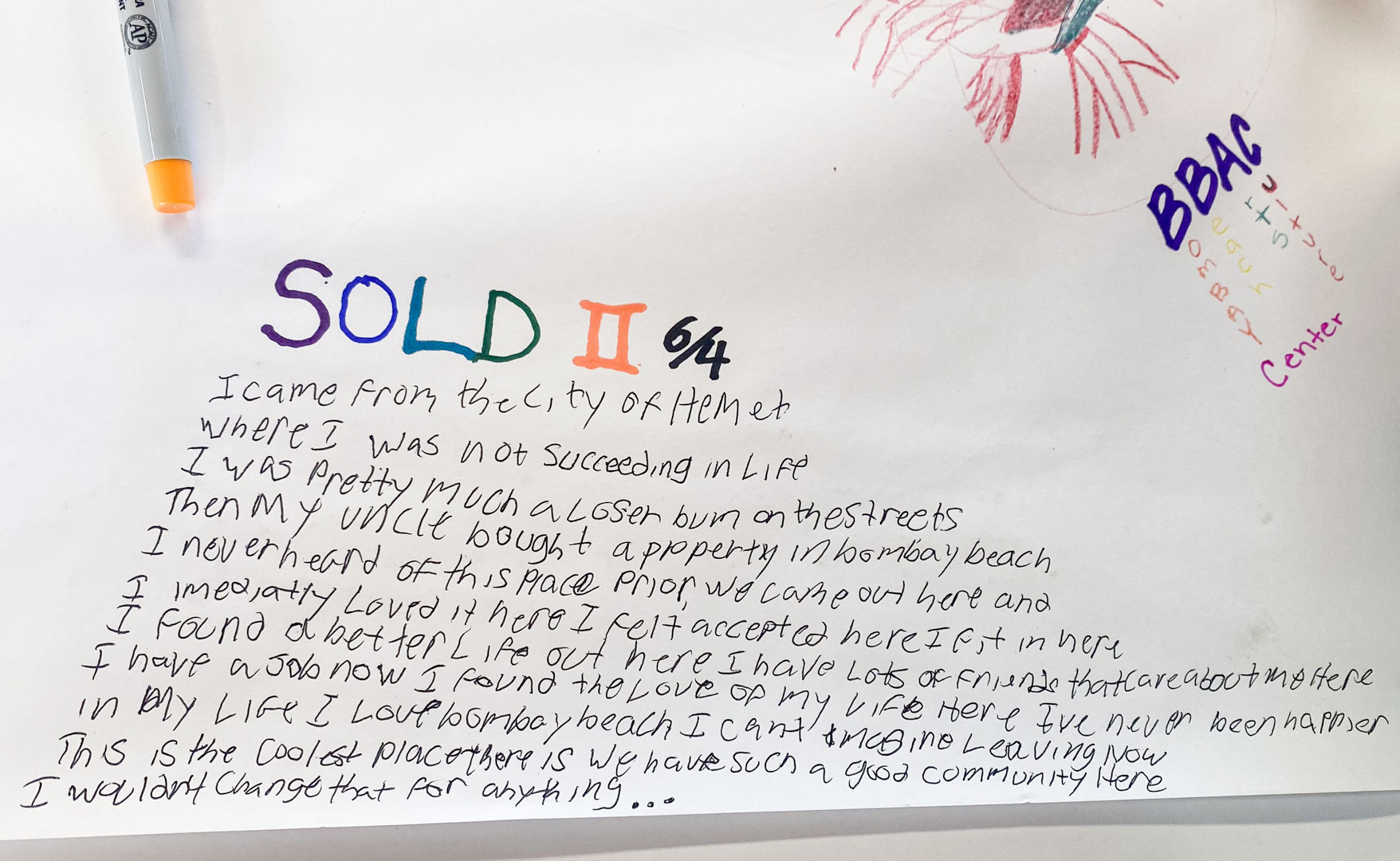
Session 2 turned inward to map the community’s social fabric. Who belongs here, and who decides that? Whose town is this, whose beach? Who can afford to live here in the future? Who speaks for this place, and who should? These are harder questions that do not have clean answers. Rather than seeking immediate solutions, this session aimed to create a comprehensive visual map of our perspectives collaboratively. Disagreements in Bombay Beach have been aired before, often in heated discussions that hurt people. Nobody argued during the mapping. Everything went onto the paper. Contradictory positions sit next to each other, because many things can be true at the same time. The written testimony will help to guide future community conversations and decisions.
 

Venue: Bombay Beach Arts and Cultural Center (BBAC), Bombay Beach, California
Date: April 1, 2026
Co-facilitation: Imperial Valley Equity and Justice (IVEJ)
Support: Partial costs covered by a grant from the Bombay Beach Institute for Industrial Espionage & Post-Apocalyptic Studies